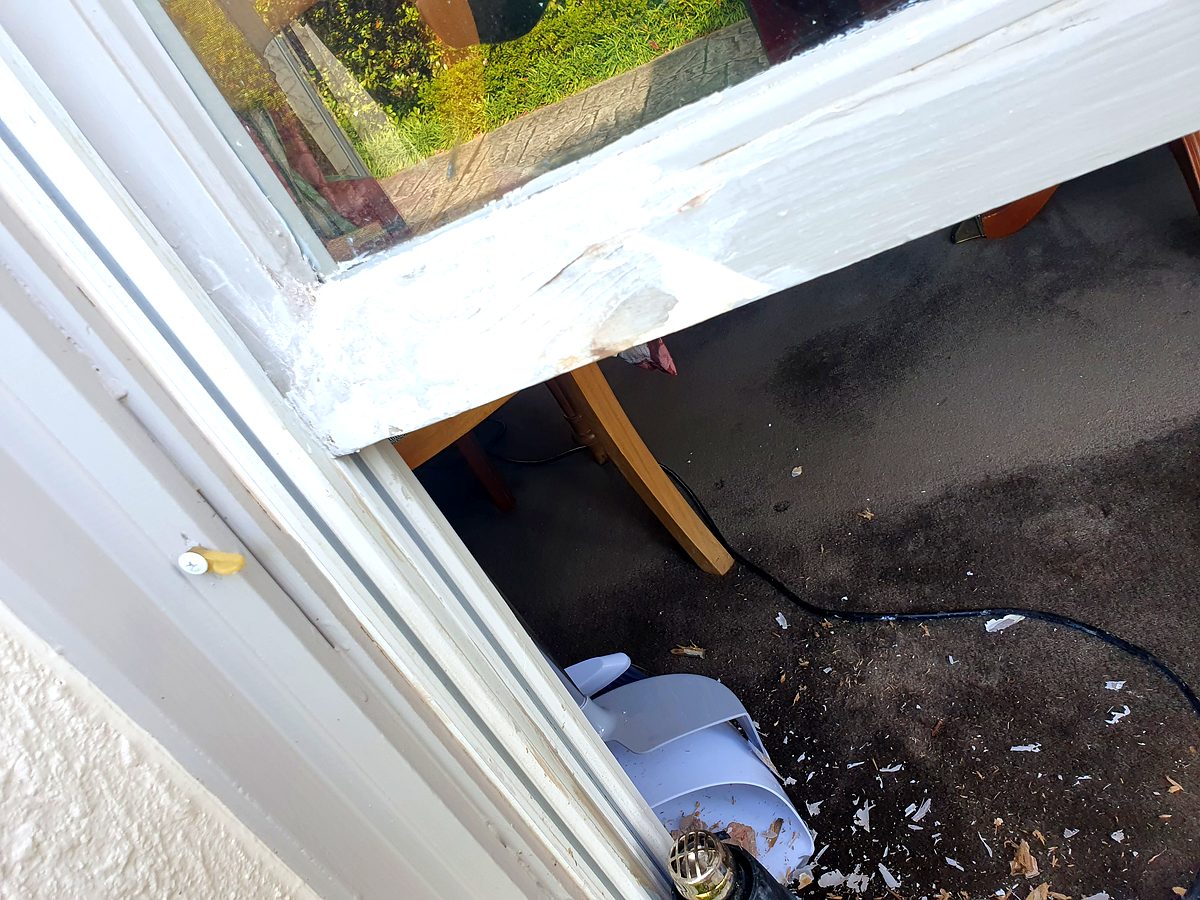
I've revisited jobs where a previous tradie has done a perfectly competent timber replacement — new sill, new frame member, correct materials — and the rot has returned within two or three years. The timber wasn't the problem. The water getting into the timber was the problem, and it wasn't addressed. Fixing rot without fixing the moisture source is building a new sill to rot in the same spot.
Where the Water Comes From
External timber rot is almost always traceable to one of a small number of moisture pathways:
- Failed caulking at joints — the most common cause. The joint between window frame and wall, or between sill and frame, relies on sealant that degrades over time. Once it opens, water tracks in with every rain event.
- Paint failure on horizontal surfaces — window sills and door thresholds are horizontal surfaces that pool water. When paint cracks or lifts on these surfaces, water sits on the bare timber.
- Inadequate sill fall — a correctly installed window sill has a slight fall toward the exterior to shed water. Sills that are flat or that have settled to level over time hold water against the frame.
- Gutter overflow — blocked gutters overflow onto fascia boards, which is the leading cause of fascia rot. The timber is replaced but the gutter is left unserviced, and the next blockage produces the same result.
- Rising damp and ground splash — door frames and ground-level joinery can receive moisture from splash-back off hard surfaces or from rising damp in masonry.
What I Do About It
Every rot repair I do includes an assessment of the moisture pathway. I'll identify where the water has been getting in and either address it as part of the repair — re-caulking joints, correcting sill fall, recommending gutter service — or document it clearly so you know what else needs to happen.
Re-caulking all joints with an appropriate flexible sealant is standard practice on every window repair. The Victorian Building Authority notes that joint sealants are a primary weather barrier in timber window installations and should be inspected and renewed as part of regular building maintenance.
The Right Way to Think About Rot Repair
Think of rot repair as two separate jobs: replacing the damaged timber, and closing off the moisture pathway that caused the damage. The first job is visible and satisfying. The second job is unglamorous and easy to skip. Skipping it means the first job has an expiry date.
When I quote a rot repair, I quote both. If there are moisture issues I can't address within scope — a drainage grading problem, a roof leak, a rising damp issue requiring a damp specialist — I'll flag them and you can decide what to do. But I won't replace timber and leave the water source in place without telling you about it.
Send Photos, Get a Quote
Based in Moorabbin, serving the full Bayside corridor. Fill in the quote form and attach a few photos — I'll get back to you with an honest assessment.
Get a Quote