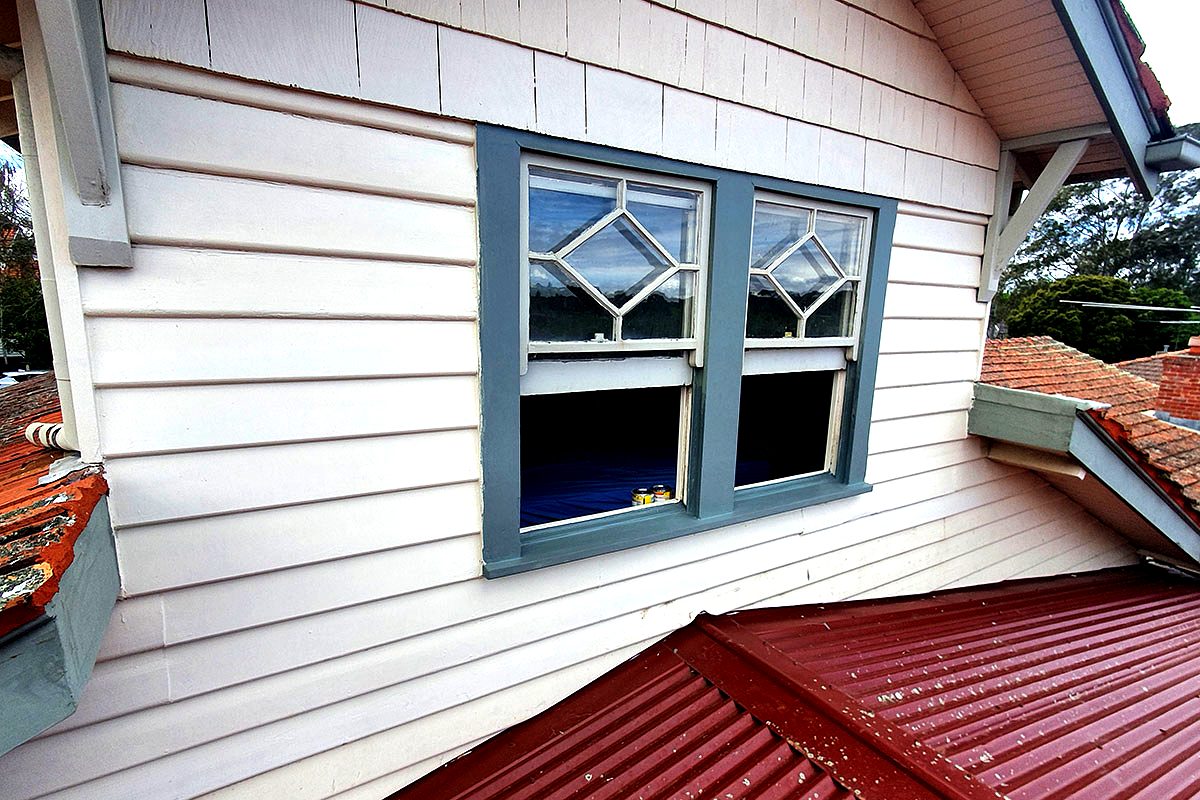
If you live anywhere between Brighton and Beaumaris, you've probably noticed that external paint doesn't last as long as it should, and that timber around windows and doors seems to need attention more often than your parents' place further inland. You're not imagining it. There are specific conditions in Bayside Melbourne that accelerate timber deterioration — understanding them helps you know what to watch for and when to act.
Salt Air from Port Phillip Bay
Properties within about 2–3km of Port Phillip Bay are exposed to salt-laden air year-round. Salt is hygroscopic — it attracts and holds moisture. When salt deposits settle on painted timber surfaces and moisture is absorbed, it creates localised damp conditions that accelerate paint degradation and timber swelling. Paint that lifts or blisters creates the entry point for serious rot to establish.
This effect is most pronounced on west and south-facing surfaces that receive prevailing winds off the bay, but no external face is entirely immune in close-proximity properties.
Higher Localised Humidity
Coastal areas maintain higher average humidity than inland suburbs, particularly overnight and in the early morning. This means external timber spends more hours per day in the moisture absorption range — not wet, but damp enough to prevent complete drying between events. Timber that doesn't fully dry is timber that stays vulnerable.
Older Housing Stock
The Bayside corridor has some of Melbourne's oldest housing stock. Federation homes in Brighton and Hampton, interwar bungalows across Sandringham and Cheltenham, and 1950s–60s brick veneer throughout Moorabbin and Bentleigh — most of this housing has original or early-replacement timber joinery that is 50 to 100 years old. Timber of that age has typically been through many paint cycles, and each paint cycle adds thickness without addressing underlying adhesion failures.
According to WoodSolutions, the industry body for engineered wood products, regular inspection and maintenance of painted exterior timber is critical in high-humidity coastal environments. The maintenance cycle that works inland is often too infrequent for Bayside conditions.
Large Street Trees and Gutter Blockage
Bayside suburbs are heavily treed — one of the reasons people love living here. It's also one of the reasons fascia boards rot. Large deciduous trees drop leaves directly into gutters, blocking downpipes and causing overflow onto fascia and eave lining. This is a predictable, seasonal problem that causes significant damage over years of deferred gutter cleaning.
What to Watch For
In Bayside conditions, check external timber joinery every 12–18 months rather than the 3–5 year cycle that might suit an inland property. Run a screwdriver along window sills and the bases of door frames — sound timber resists penetration, while rotted timber yields. Paint that's lifting at joints or bubbling on flat surfaces is a reliable early indicator. Catching rot at the surface stage is a $300–500 repair; waiting until the structural timber is compromised is significantly more.
If you're seeing signs of rot anywhere on your external joinery, send me a few photos and I'll give you an honest assessment of where it's at.
Send Photos, Get a Quote
Based in Moorabbin, serving the full Bayside corridor. Fill in the quote form and attach a few photos — I'll get back to you with an honest assessment.
Get a Quote