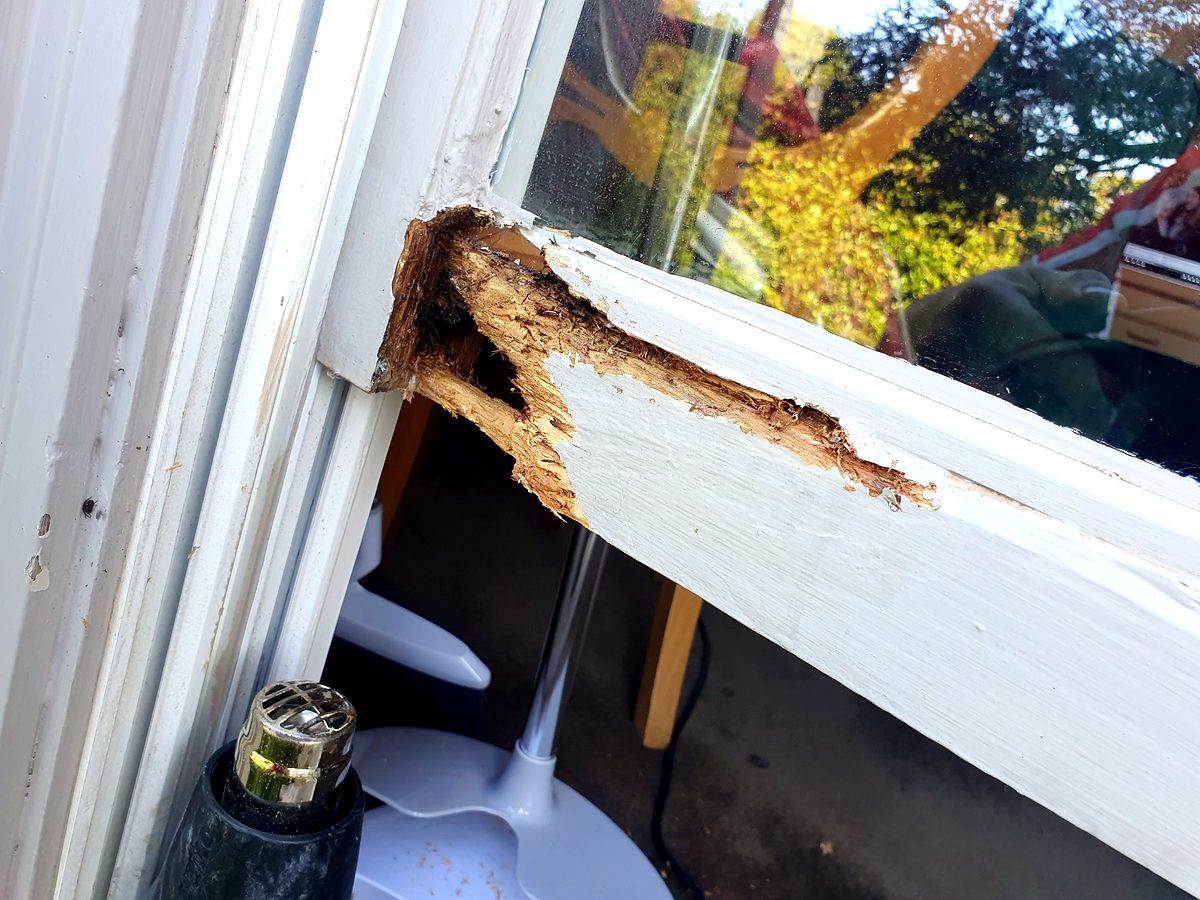
One of the most common things I hear from homeowners is some version of "I wasn't sure if it was serious enough to call someone." Timber rot exists on a spectrum, and while some of it is cosmetic and simple to fix, other cases are hiding structural failures behind a surface that still looks mostly intact. Here's how to read the difference.
Surface Rot — What It Looks Like
Surface rot typically presents as paint that's lifting, blistering or cracking at joints and edges. Underneath, the timber may be discoloured — grey, brown or black — but still feels reasonably firm when pressed. A fingernail pressed into the surface might leave a slight impression but doesn't sink in. The paint film has failed but the structural integrity of the timber is still mostly intact.
At this stage, repair is straightforward. Clean back to sound timber, stabilise with a penetrating primer, fill with a product like Parchem Builders Bog, prime and repaint. If you catch rot here, you're looking at a minimal repair cost and a result that lasts.
Active Rot — Going Deeper
Active rot is wet and soft. The timber feels spongy underfoot or under fingertip pressure, may have a slightly sweet or musty smell, and the wood fibres separate easily. At this stage, the rot is still progressing — it needs to be cut back well past the visible boundary of damage to reach genuinely sound timber, because the fungal growth extends beyond what you can see or feel.
The screwdriver test is useful here: probe into the timber with moderate pressure. Sound timber resists. Actively rotted timber accepts the blade with little resistance, often going in 20–30mm or more before hitting something solid.
Structural Rot — When It's Serious
Structural rot occurs when the primary load-bearing timber has been significantly compromised. On a window, this means the structural members of the frame itself — not just the sill or casing — have lost integrity. On a door, it means the jamb or structural surrounds are affected. You might see the frame flex when the door is operated, see cracking in adjacent plaster or render, or find that the timber essentially crumbles when probed.
According to research published through WoodSolutions, timber that has lost more than 20–30% of its cross-section to decay should be treated as structurally compromised and replaced rather than repaired in place.
The Rule of Thumb
If the paint is lifting but the timber feels firm — it's cosmetic. Fix it this season.
If the timber is soft or spongy to pressure — it's active rot. Fix it this month.
If the timber crumbles or the structure is flexing — it's structural. Fix it this week.
Send me photos if you're unsure which category you're in. I'll give you a straight answer.
Send Photos, Get a Quote
Based in Moorabbin, serving the full Bayside corridor. Fill in the quote form and attach a few photos — I'll get back to you with an honest assessment.
Get a Quote